

Christmas Lights and Permanent Lighting in the Salt Lake Valley
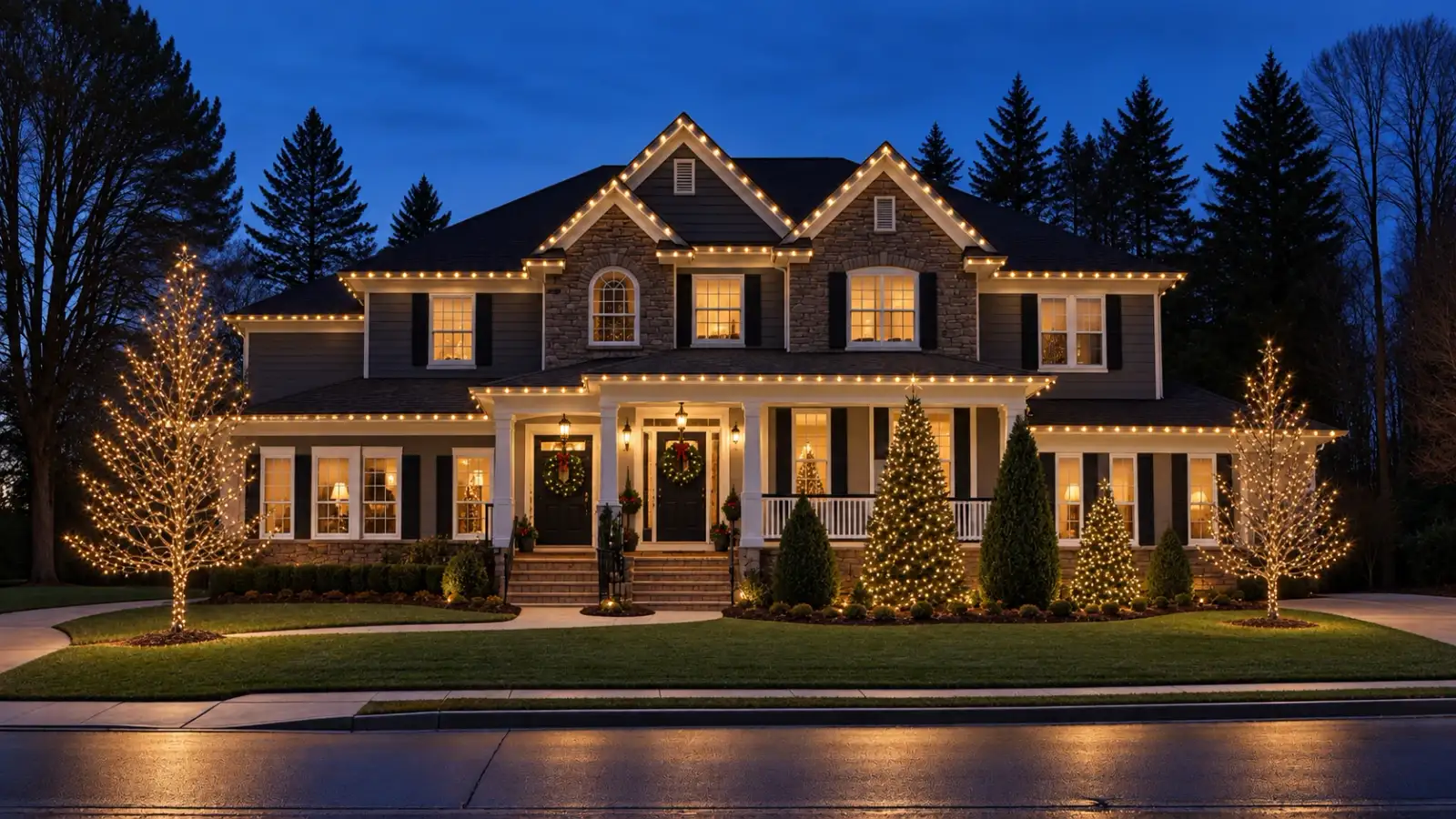
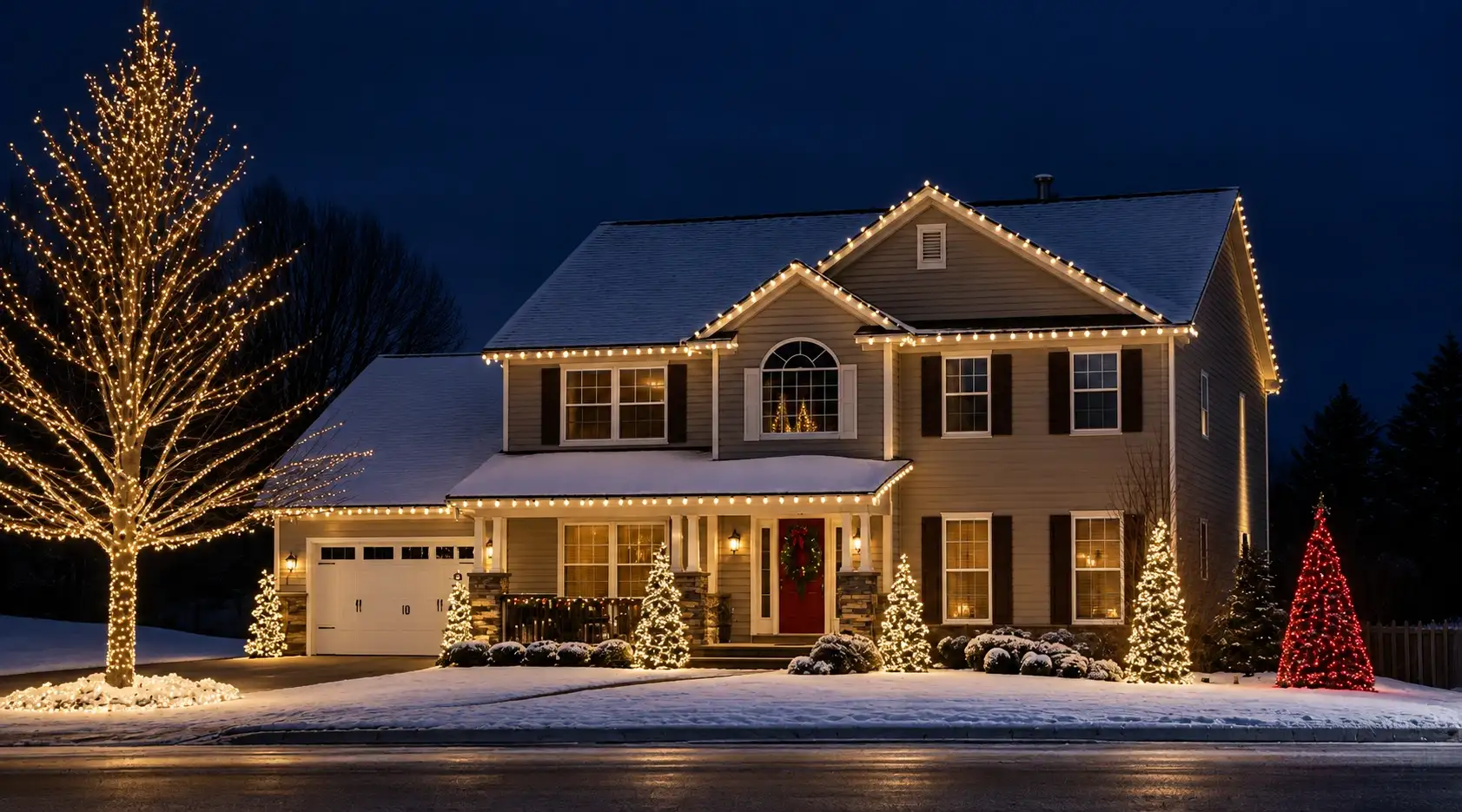
Most searches for Christmas lights in Salt Lake City are people looking for displays to go see. This page is the other half of that: lighting installed on your own home. We supply the lights, hang them, look after them through the season, and take everything down and store it in January.
If you searched for Christmas lights in Salt Lake City looking for displays — this is the other side of that
A lot of people typing that search are hunting for a list of neighborhoods and homes to drive past.
Fair enough — but if part of what you are looking at is what it would take to get your own house lit up that way, that is what this page covers: the install itself, not a tour guide.
Salt Lake City sits at 4,300 feet in Salt Lake County, with a 2020 census population of 199,723. That is colder ground than St. George, and the numbers show it.
| Measure | Salt Lake City | Lehi | St. George |
|---|---|---|---|
| Elevation | 4,300 ft | 4,561 ft | 2,530 ft |
| Average November low | 31 °F | 25 °F | 34.7 °F |
| Average December low | 23 °F | 18 °F | 27.9 °F |
Salt Lake City runs a little milder overnight than Lehi despite sitting lower in elevation, but it is still well below St. George on both months, which is why the install calendar up here starts earlier than it does at home.
The practical effect is the same shape as it is across the rest of northern Utah, just with its own numbers: a comfortable install window that runs through October and into early November, and a takedown in January that gets scheduled around the actual roof, not a date picked in advance.
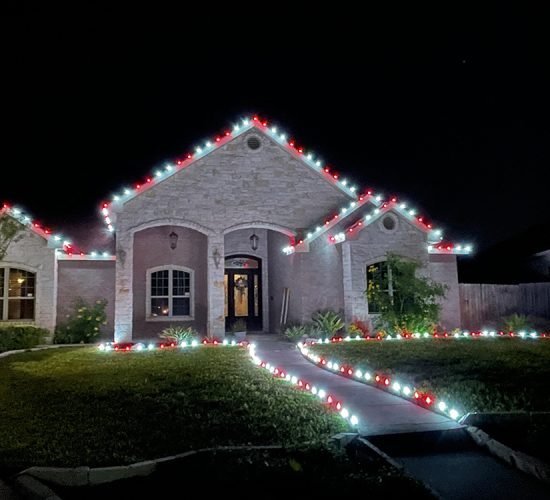
What you get
- A design walk-through before anything goes up
- Lights, clips and controllers, all supplied
- An install on the date we agree
- Support if a section goes dark mid-season
- A January takedown, stored until next year
Full detail on the Christmas Light Installation page.
Nothing here is bought, borrowed or left behind. The lights, clips and controllers arrive with the crew and leave with the crew in January, so there is no bin of tangled strands taking up space in the garage between seasons.
A valley of very different housing
Salt Lake City itself mixes dense, older neighborhoods close to downtown with newer construction further out, and the wider valley around it adds still more variety in roofline age and material.
That range means the design walk-through matters more here than almost anywhere else we work — a plan that fits a 1940s bungalow eave does not automatically fit a newer two-story roofline a few blocks over, and a design that works on a flat suburban lot may need adjusting on a sloped one.
If your street or neighborhood has HOA rules on exterior lighting, bring them to the walk-through so the design starts inside them.
The sequence stays the same regardless of which part of the valley you are in: a design visit, an install on the date we set, a call-in line if a section goes dark mid-season, and a January pickup once the holidays are over.
We cover the whole valley from this one page rather than running a near-duplicate page for every suburb around the city.
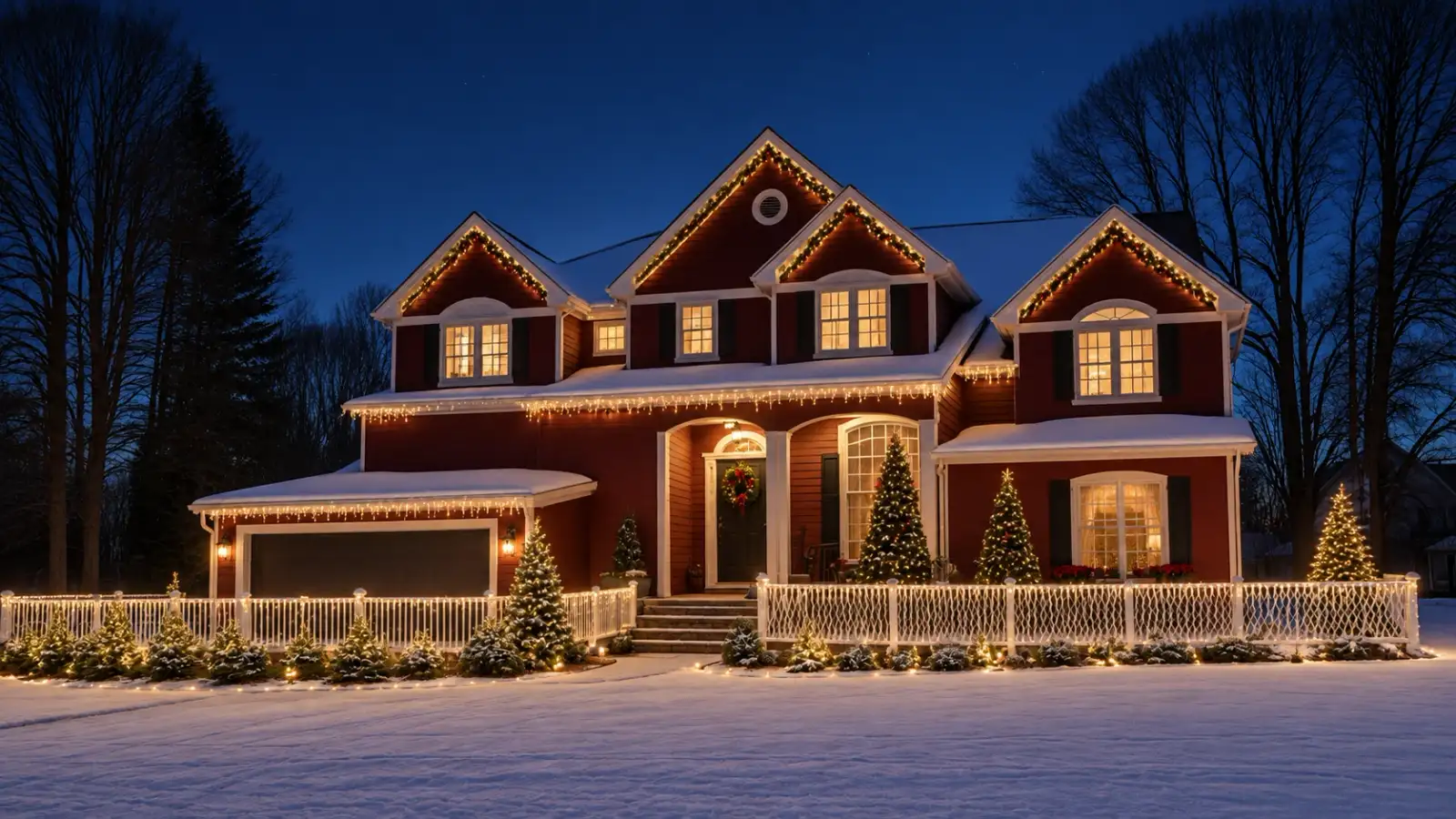
Cold-weather materials, briefly
At 4,300 feet with average nighttime lows in the low 30s by November and low 20s by December, plastic clips get more brittle to handle and the safe working day gets shorter.
That is a crew-handling issue, not a reason the lights themselves fail — LED strings sold for outdoor holiday use are rated for what the valley sees in a normal winter.
It is also why we do not push installs into late November here. A frosty roofline in the morning and a short daylight window in the afternoon both cut into a crew's working hours, and rushing a cold install is how corners get cut on a job that is supposed to hold up for the whole season.
Commercial and event lighting in the Salt Lake Valley
We also light commercial frontage, offices, HOA and community entrances, and events across the valley. It is the same design-first process as a home install — a walk-through to agree the design, an install on a set date, and support through the season — scaled to the size of the building or the venue.
Details on the commercial and wedding and event pages.
Lehi, Utah Valley and the rest of the Wasatch Front
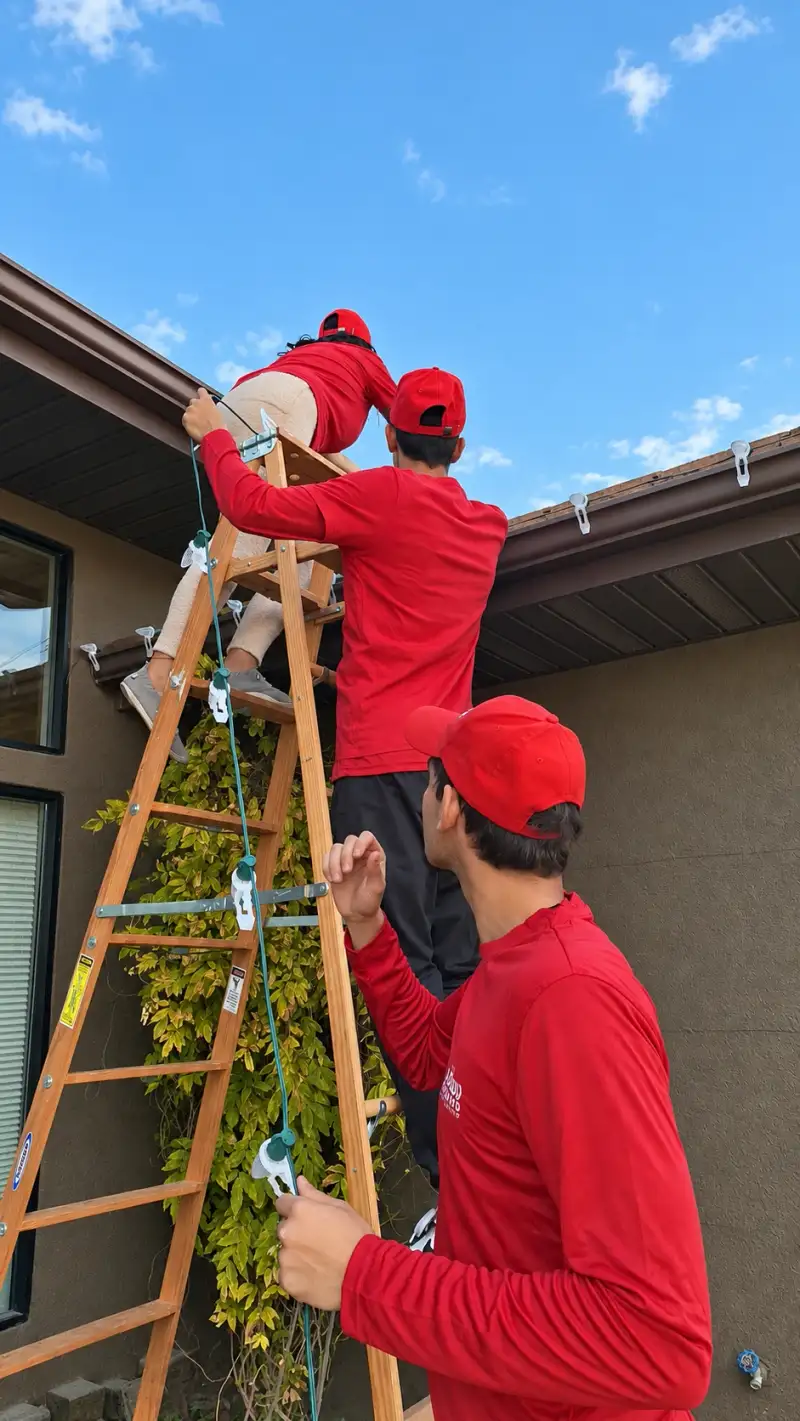
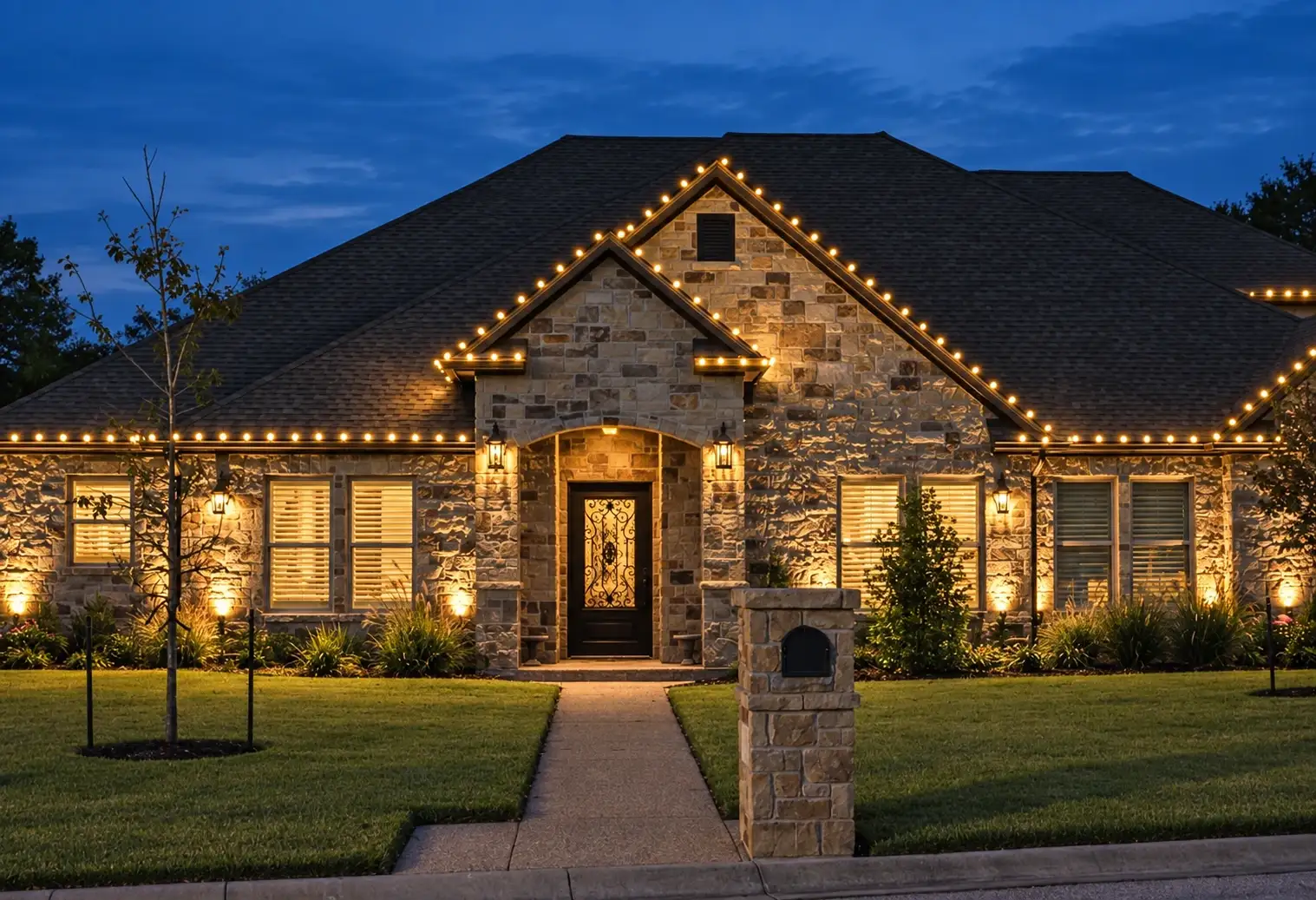
Salt Lake City is one stop on our northern route, not the only one. We also install in Lehi, across Utah Valley, and along the rest of the Wasatch Front — the same package, the same design-first process, and the same January takedown scheduled around the weather.
None of that changes what happens at your address: one design visit, one install date, one point of contact if something needs attention mid-season, and one pickup in January.
Call (435) 357-0411 or request a quote with your address and we will design and quote your home.
Permanent lighting in the Salt Lake Valley: the winter case
Salt Lake City sits at 4,300 feet in Salt Lake County, with a 2020 census population of 199,723.
More detail
Its average November low is 31 °F and its average December low is 23 °F — colder than St. George on both counts, and close to what Provo sees, though a little milder than Lehi's 25 °F and 18 °F.
The argument does not change with the exact number. A seasonal install puts someone on the roofline twice a year, and the January trip — takedown — is the one that can land on an icy north-facing slope in a below-freezing month.
A permanent system is one install, done in good weather, and the roof does not get touched again for it.
The secondary argument is materials. A seasonal strand spends most of the year boxed up and the rest of it cycling between freezing nights and daytime sun, which is what actually shortens its life. A fixed, outdoor-rated system is built to stay outside through that swing.
None of this makes the Salt Lake Valley a harsh place to run lighting. It simply is not St. George, and the elevation and overnight-low figures above are the plain reason a fixed system earns its keep here in a way it might not somewhere warmer.
Install it in the warm months
The channel goes up in dry weather above freezing, so the sensible window is spring through October. At this elevation and this far north, cramming a permanent install into the three weeks before Thanksgiving is how a good job turns into a rushed one.
A frosty roofline in the morning and a short daylight window in the afternoon both cut into a crew's working hours, and a permanent system is not the job to rush — it is meant to stay up for years, not get patched together against a deadline.
Book it in the summer and it is live and tested long before the first freezing night, wherever in the valley you are. The design walk-through, the channel install, and a final check of every zone all happen while the fascia is dry and there is full daylight to work with.
Permanent or seasonal, for a Salt Lake Valley home
Permanent costs more up front and then stops costing you a roof trip every year. Seasonal is lower to start and repeats every season for as long as you keep doing it, on the same weather-driven calendar as the rest of northern Utah.
If you expect to move soon, or you rent, seasonal is the honest answer — see Christmas lights in the Salt Lake Valley.
If you expect to be in the house for years, the January-roof argument above tends to settle it: one visit now, against two visits every year, every winter, for as long as you own the house.
How the system works, and every other city we fit it in: permanent holiday lighting. The nearest other northern page is permanent lighting in Lehi.
A closer look
What it looks like
How it works
One call, and we handle the rest
Here is what happens after you call, start to finish. It is all included.
1Design
We design it with you
A custom design for your home, with a few options to choose from. Once you approve it, we handle the rest.
2Lights
We bring the lights
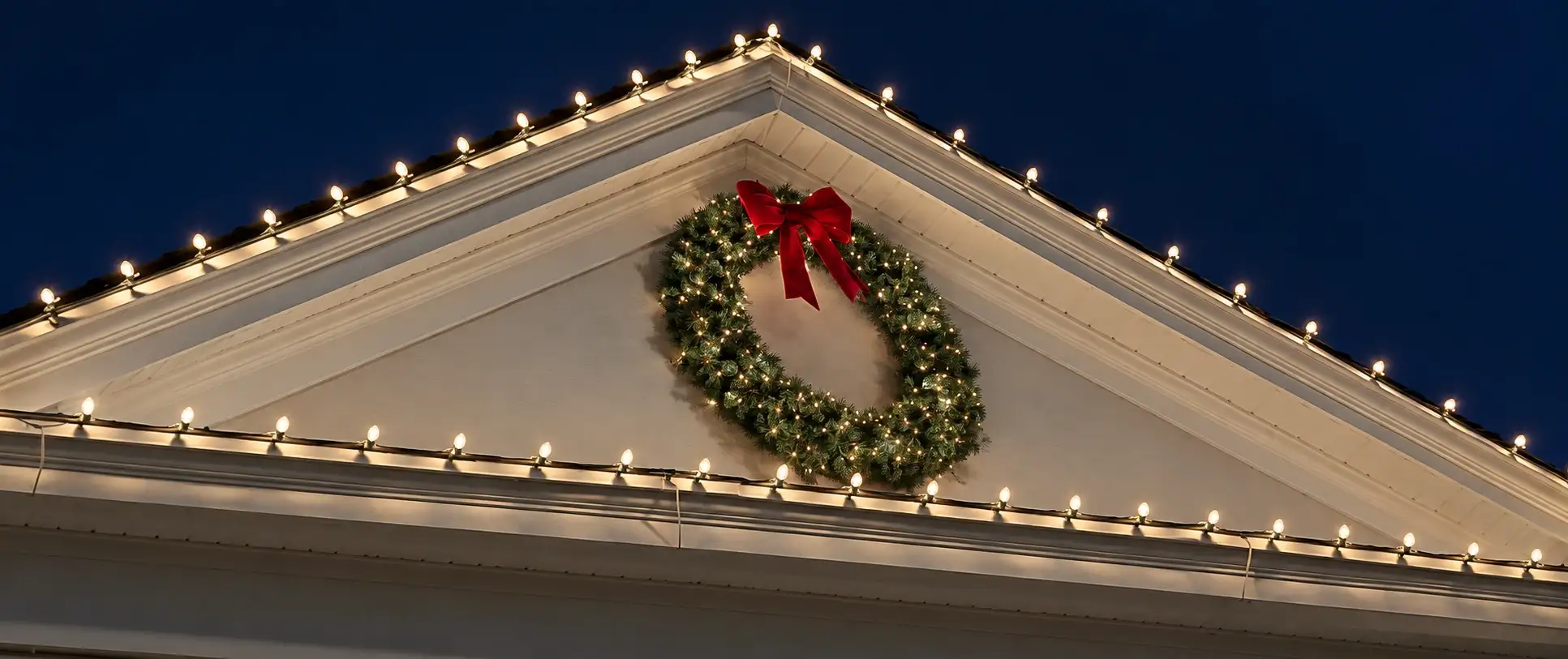
Factory-direct LED C9 bulbs in the traditional warm glow: bright, safe and easy on the power bill.
3Install
We fit it to your house
Every run is cut to your roofline and the cords are hidden. One cord, one outlet, one timer: on at dusk, off after 2, 4, 6 or 8 hours, or at dawn.
4Season
We look after it
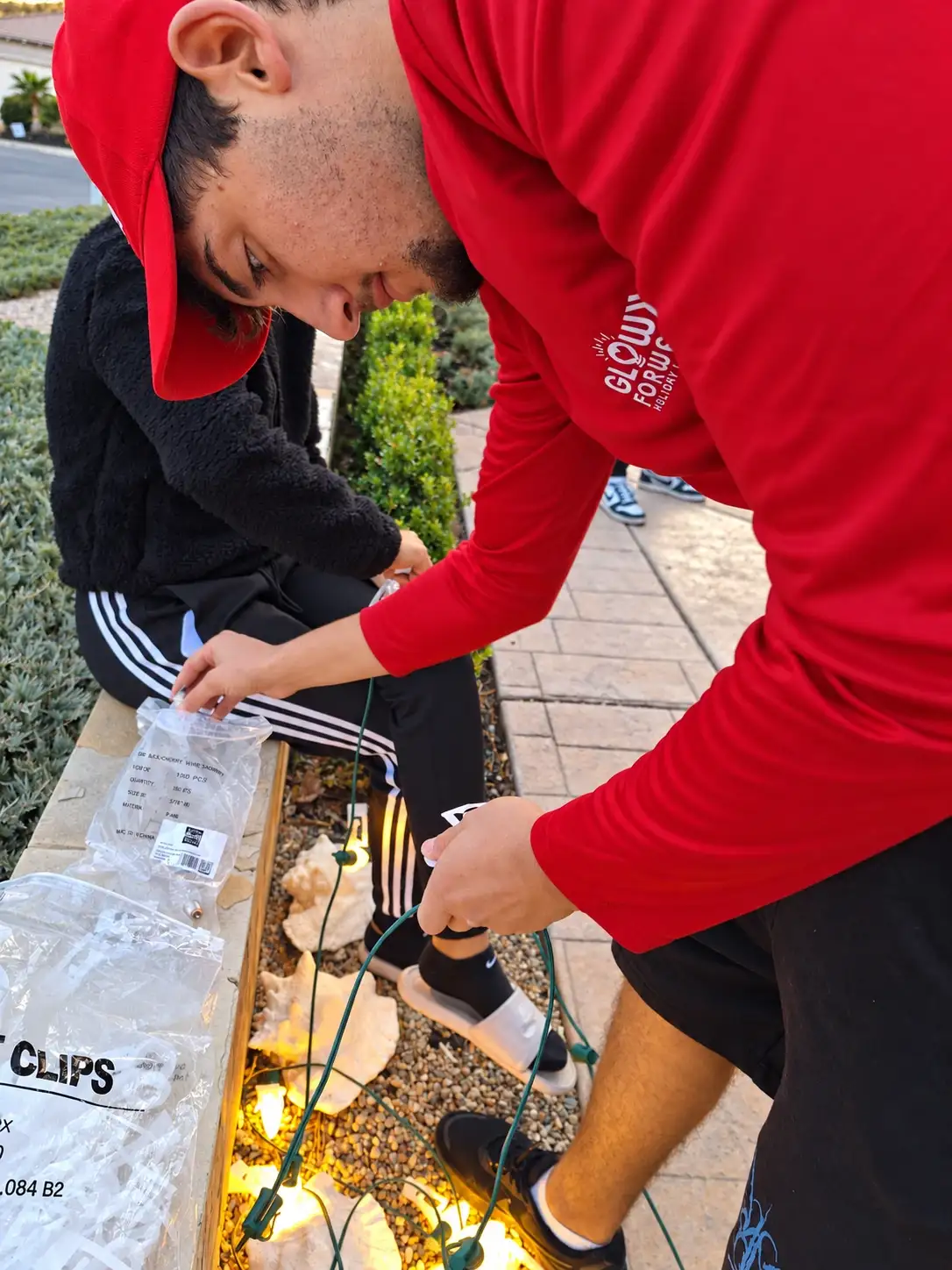
A bulb out before a party? Call and we fix it. Wind takes a run down? We re-hang it. We also drive by at night to catch touch-ups early.
5January
We take it down
We take everything down in January and store it until next season.
You never buy the lights
They stay ours. Next year you can add to the design, change it or scale it back.
No multi-year contract
Book one season. Your lights are ready if you want us back next year.
Every bulb matches
LEDs shift in color and brightness with use. If a replacement bulb does not match, we replace all the lights on your home, not just the one.
Get my free designor call (435) 357-0411
FAQ
Questions people ask
Something else on your mind? Call (435) 357-0411 and ask us.
I'm looking for Christmas light displays to visit in Salt Lake City — is this that list?
No. This page is about lighting installed on your own home. If you are after a list of local displays, this is not it — but if you want your own house lit up like the ones you have been looking at, that is exactly what we do.
When should I book in Salt Lake City?
September or October for a November install. Salt Lake City’s average November low is 31 °F, close to Provo’s and noticeably milder than Lehi’s 25 °F, but the window still closes as the nights get colder.
Is Salt Lake City colder than St. George?
Yes. Salt Lake City sits at 4,300 feet against St. George’s 2,530 feet, and its average November and December lows (31 °F and 23 °F) both run below St. George’s (34.7 °F and 27.9 °F).
Do you serve the whole Salt Lake Valley, or just the city itself?
We install across the valley, not only within the city limits. Send your address with a quote request and we will design and quote it.
When does takedown happen in Salt Lake City?
January, scheduled around the weather rather than a fixed date, the same as everywhere else we work.
Do you do commercial and event lighting in Salt Lake City?
Yes, the same design-first process as a home install. Tell us the venue and dates and we will quote it.
Does permanent lighting handle a Salt Lake winter?
Yes — it is an outdoor-rated system fixed to the building, built to stay out through the season rather than boxed up for eleven months.
When can you install permanent lighting?
Spring through October. At 4,300 feet with average November nights already in the low 30s, waiting until the weeks before Thanksgiving is how a good install becomes a rushed one.
Free design and quote
Want to see it on your house in Salt Lake City?
Tell us where
Your name, how to reach you, and roughly what you would like lit.
We look at your home
Usually from street and aerial photos, so there is nothing to schedule to get started.
You get a design and a quote
A custom design with a few options and a line-item quote. Change anything you like.
No pressure and no multi-year contract. If it is not right for you, that is fine too.
Get your free quote
Elfy, our assistant, asks a few quick questions in the chat. A person prepares your custom design and quote.
Get my free quoteKeep exploring
- OverviewChristmas light installationThe seasonal service, start to finish
- RelatedPermanent holiday lightingInstalled once, run from your phone
- RelatedUtah ValleyChristmas lights in Utah Valley
- RelatedLehi & northern UtahLehi, Utah Valley and Salt Lake City
- RelatedPermanent lighting in LehiThe year-round option in Lehi
- RelatedCommercial lighting in LehiStorefronts, offices and HOA entrances